
Your Clean Energy Roadmap
Save money on energy bills. Avoid power outages. Improve home air quality, comfort and safety. Reduce climate pollution. We’ll even send you a free yard sign to display as you electrify! Just drop us a line.
1. Understand energy usage in your household
The average Hood River County household energy spending consists of:
60% vehicle fuels
25% space heating and cooling
10% heating hot water
5% other uses
Replacing gasoline vehicles with electric vehicles, upgrading furnaces or baseboard heat to heat pumps, and upgrading old water heaters to heat-pump water heaters cuts the average annual energy costs by more than half.
2. How can the average household afford clean energy upgrades? Make a plan!
For most situations the most economic strategy is to plan for clean infrastructure when the old vehicles or units require replacement—which for both vehicles and energy appliances happens on average every 15-20 years. Renting? See your options here.
What will it take for your next vehicle to be electric?
Does my home get enough sun for panels?
How much longer will your heating system work?
When will the water heater need replacement?
How will I track rebates or sales events?
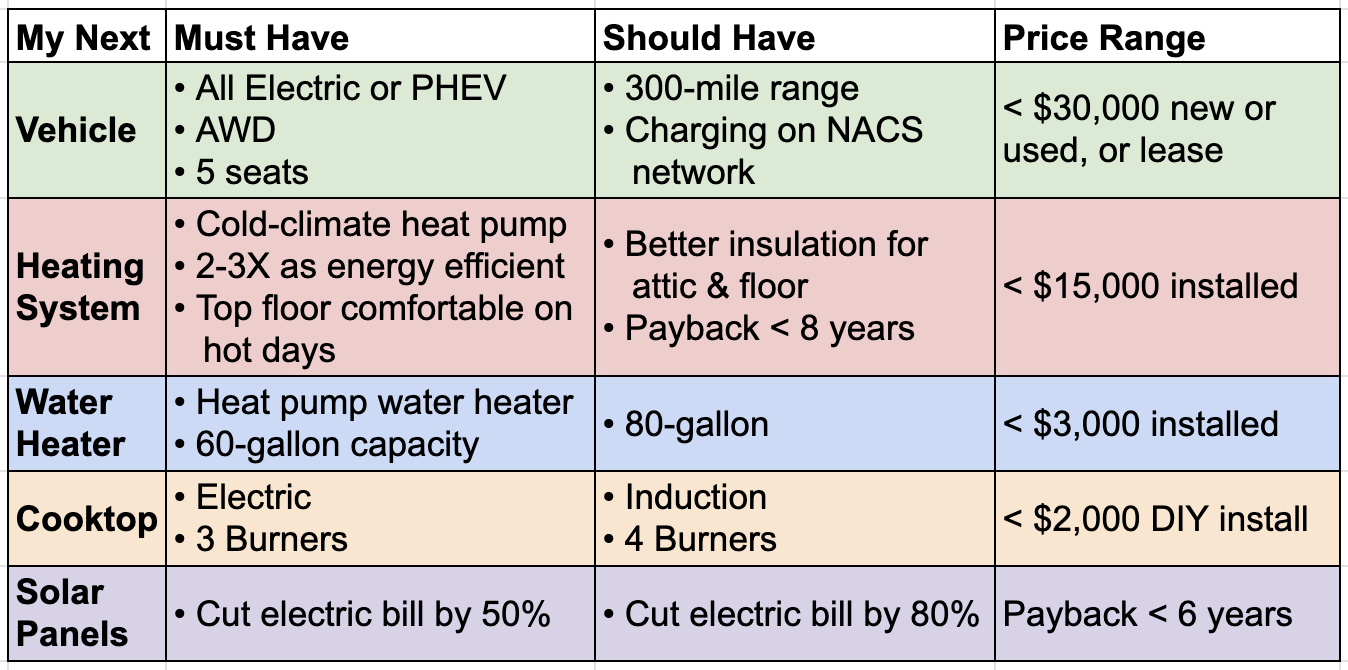
For each of these replacements, a basic plan can just list the main must-have features for your household.
Replacement plan examples:
3. When replacement is imminent, get a coach (FREE) to help navigate the options

A coach can help you navigate electrification options relevant to your household. They can recommend contractors, sort proposals and find incentives to save you time and money. Electrify Oregon has trained a state-wide network of volunteers who are ready to help you.
4. Take action
Choose between contractor bids (or vehicles)
Purchase with optimal incentives and financing
Check off the addition in your replacement plan
Celebrate your progress by checking off your yard sign
