
Check out our this clean-energy household—a Hood River house (1510 C Street) that powers itself as well as two vehicles! Join us to learn how Peter Kernan and Caroline Koehler revamped their 1963 house to achieve net positive energy.
The new features, they said, “allow us to reduce reliance on fossil fuels and minimize our impact on the natural world. In the spirit of self-sufficiency, we were also inspired by the goal of producing as much energy as we consume annually. In a world where much feels out of our control, we chose to electrify our home and add solar, because these are accessible, pragmatic, and concrete actions.”
Peter and Caroline’s energy features:
Added lots of insulation
Upgraded older windows with triple pane
Replaced gas furnace with an efficient heat pump
Upgraded to a heat-pump water heater
Added 12.5 kW of solar panels (no storage yet)
Replaced their last gasoline car in 2020
Removed gas meter and capped the gas line
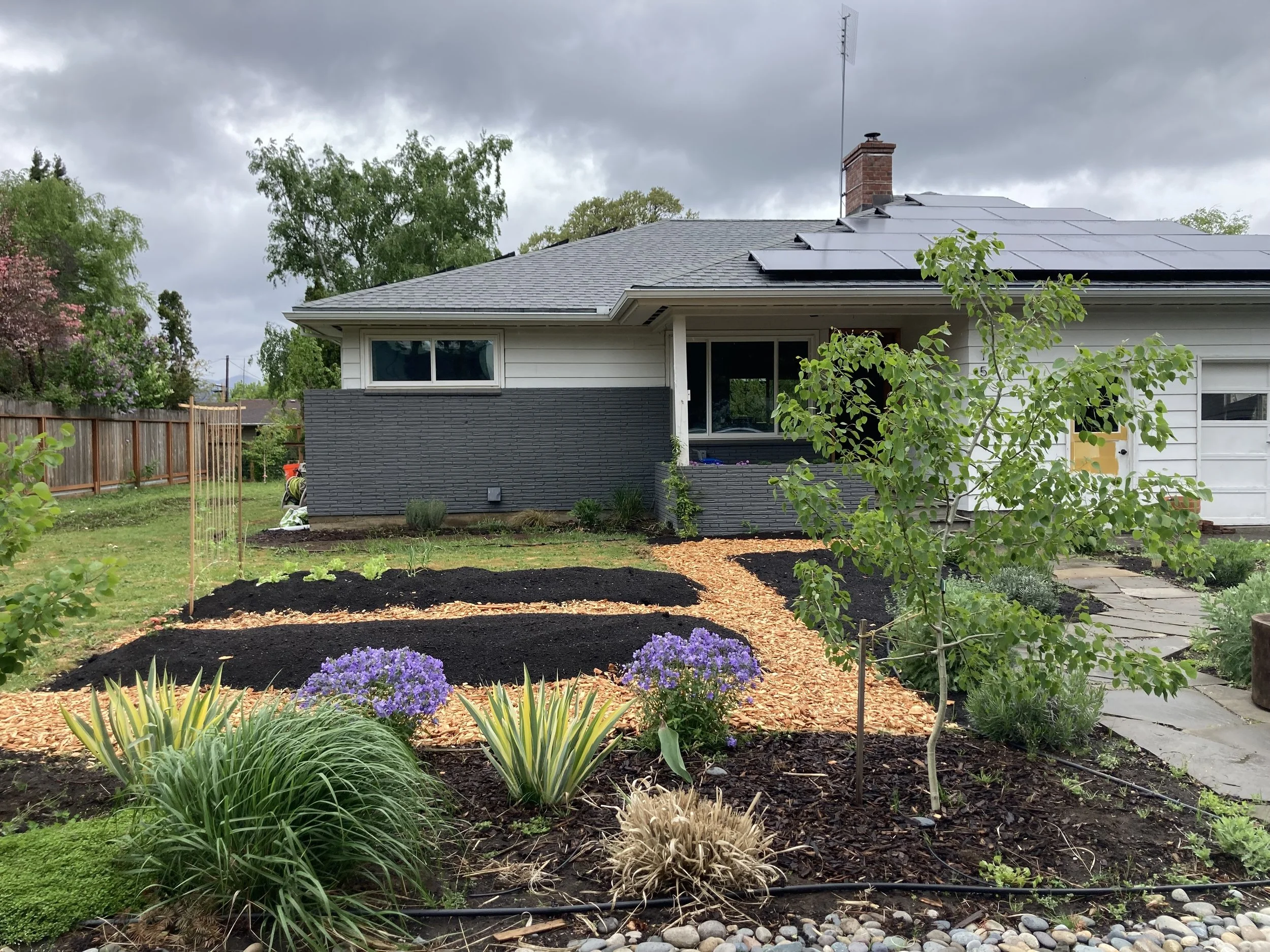
They took full advantage of incentives
Energy Trust rebates for insulation and solar
State of Oregon rebates for solar and EV;
Federal incentives for insulation and windows, solar, and EV.
Economics:
The resulting monthly power bill is $17.28 per month, just the connection fee.
Based on current consumption and Pacific Power's $0.155/kWh volumetric rate, savings total about $2,300 per year.
The after-incentive cost was ~$17K, so the payback period is about 7 years. This would likely be even shorter if the gasoline savings were included.
Notably, after 25-30 years, the cost of electricity will average ~$0.05/kWh
Their continuous improvement plans include:
Expand their solar array (+4 kW feasible)
Add storage and enroll in Time-of-Use (TOU) rate program with Pacific Power
Enroll in a managed EV charging program
Enroll in Cool Keeper demand response program
Add more insulation and upgrade remaining old windows
Install a more efficient heat pump (~1,500-2,000 kWh savings possible)
Energy experts will be there to answer your questions. See you on Feb. 7!